Interior Design Studio Website Built for Portfolio Presentation and Consultation Requests
StartWebTop built a portfolio-style website for Alcherryart Studio, a Denver-based creative studio combining interior design, styling, original abstract art, custom prints, and 3D visualizations. The site was structured to present the designer’s visual work, explain service options, show artistic credibility, and guide visitors toward a consultation request.
A Creative Service Website Needed to Sell Taste, Process, and Trust
Interior design clients do not choose only by price. They need to feel the designer’s taste, understand the service format, review portfolio examples, see credibility signals, and know what happens after they make contact. The website was built around that decision path instead of acting as a simple online gallery.
Hero Section Built Around the Designer’s Personal Brand
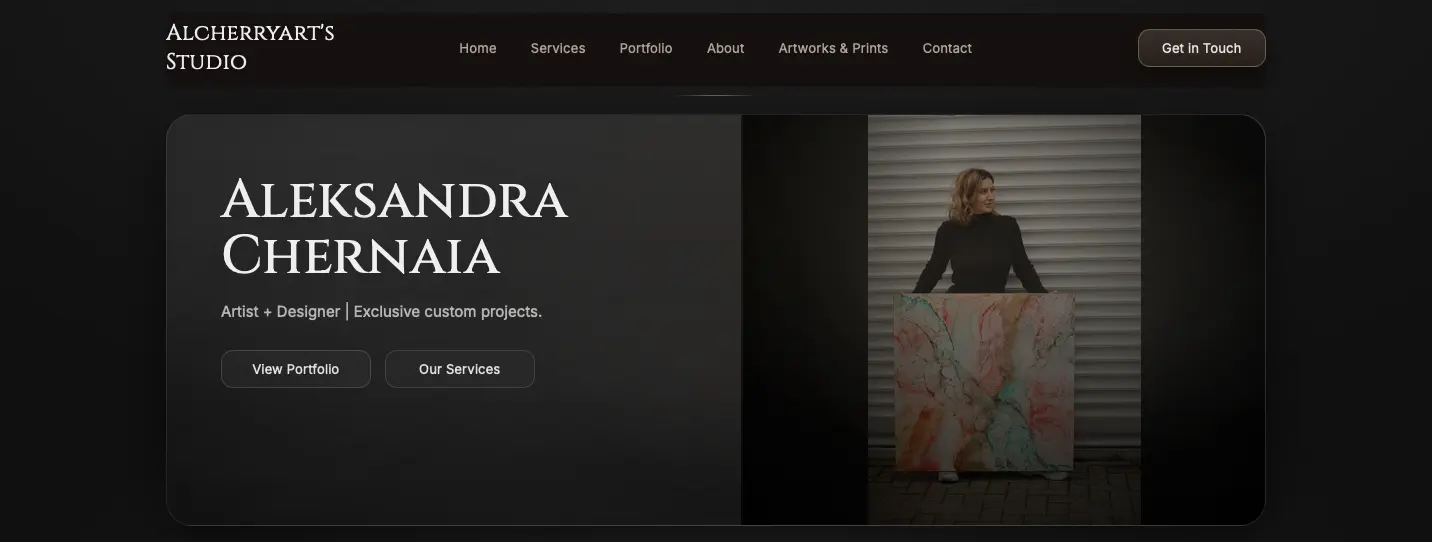
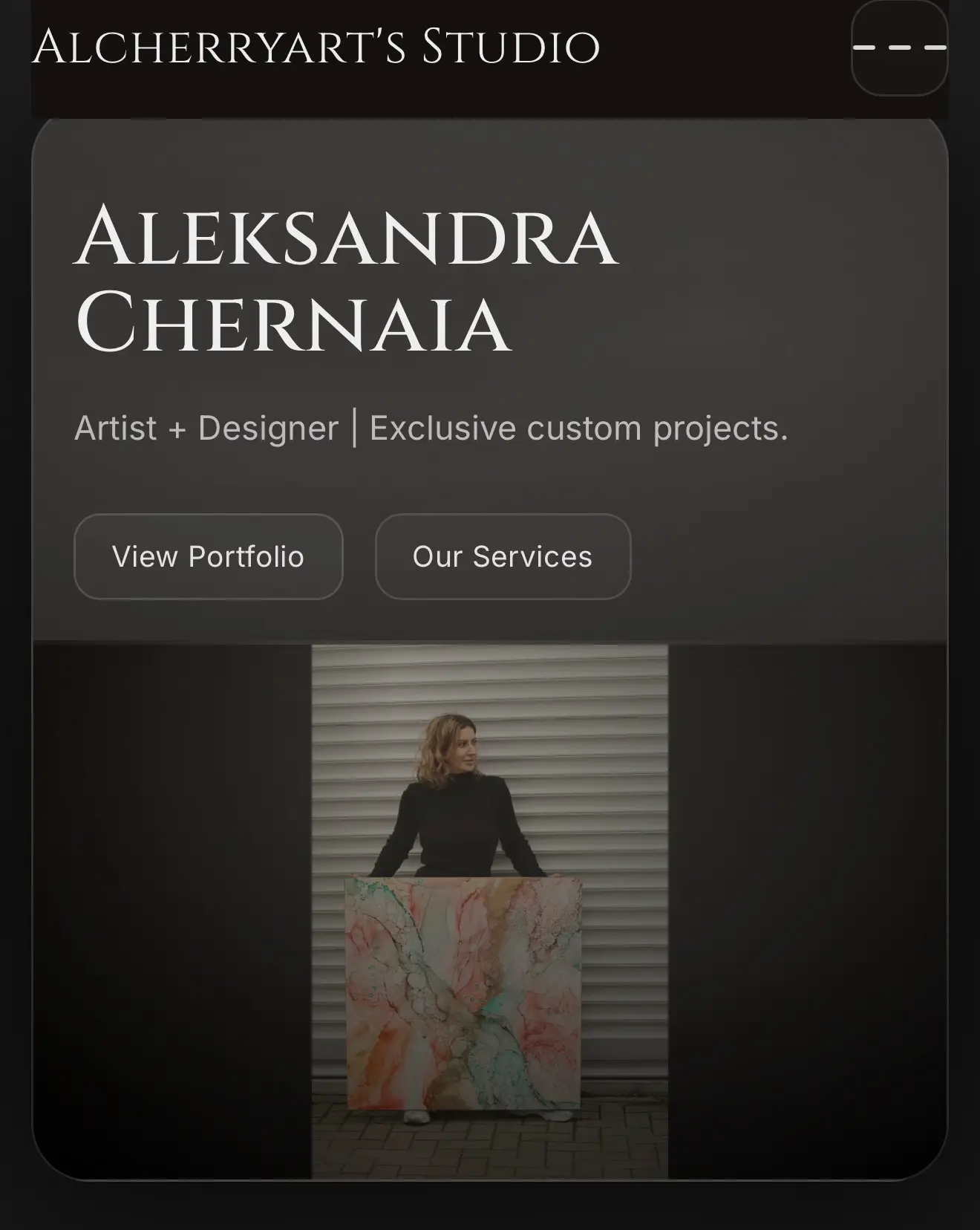
The homepage introduces Aleksandra Chernaia as an artist and designer, then connects the visual identity to exclusive custom projects. For a creative studio, the first screen needs to establish personality, taste, and a reason to view the portfolio before asking for contact.
What this proves
- The site leads with the designer’s identity instead of a generic studio headline.
- The first screen directs visitors toward portfolio review and service discovery.
- The creative positioning supports both interior design and original art.
- The mobile layout keeps the visual presentation usable for phone visitors.
Service Packages Organized for Different Client Needs
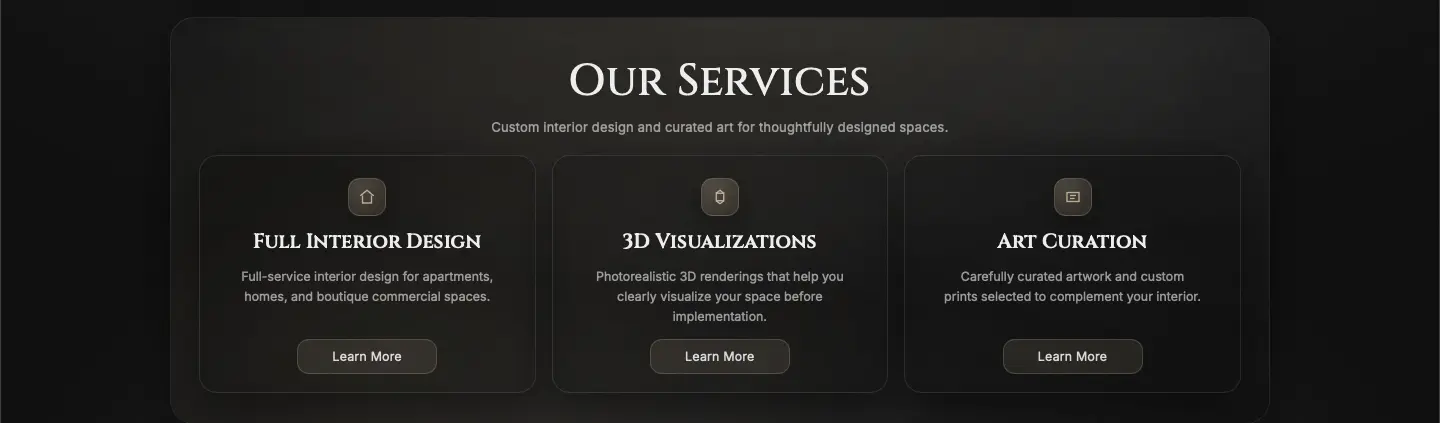
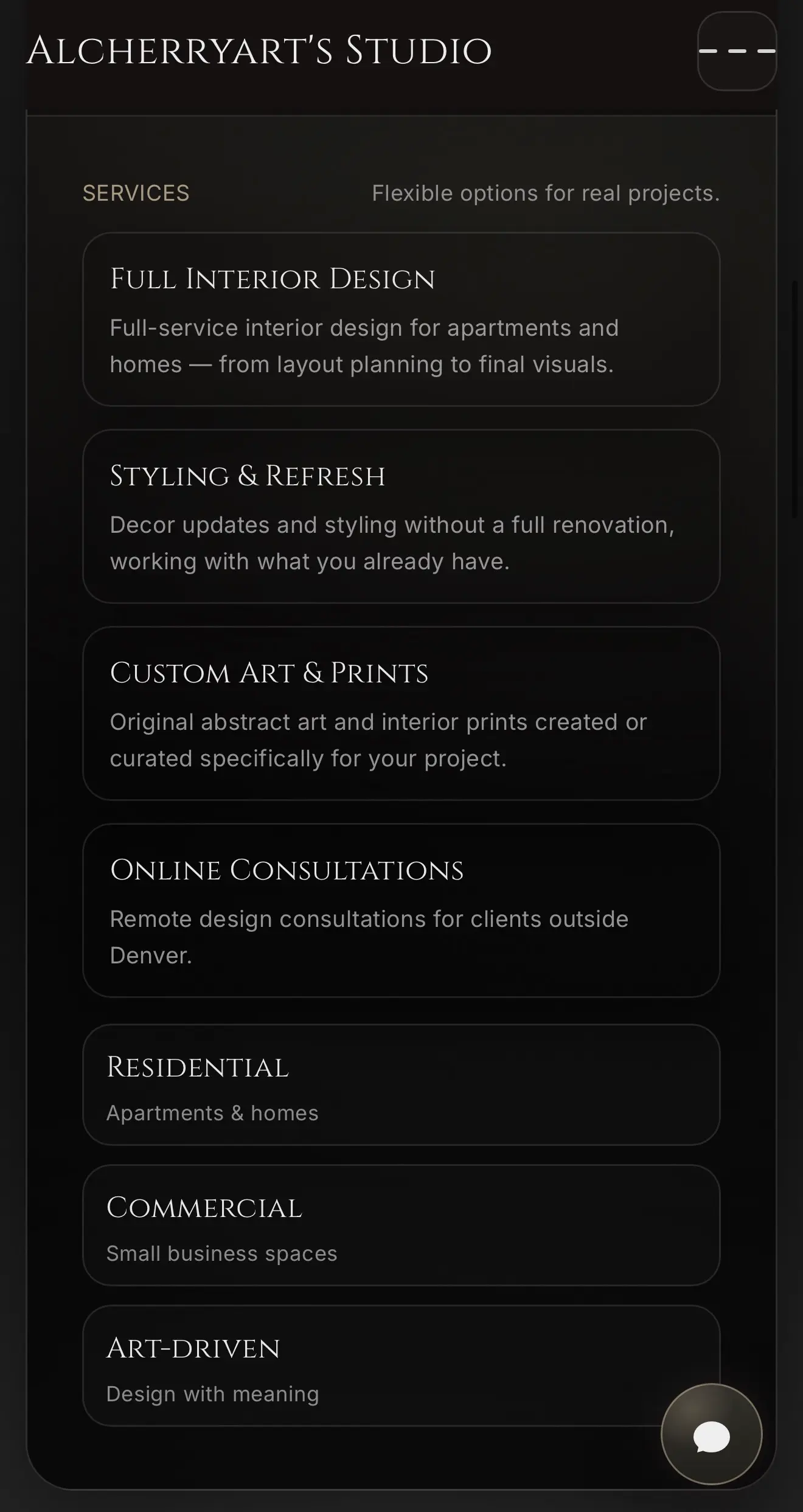
The site separates full interior design, bathroom or single-room design, 3D visualizations, art curation, custom art, and online consultations. This helps visitors understand whether they need a full project, a focused room package, remote guidance, or art-driven support.
What this proves
- The website turns creative services into understandable buying options.
- Visitors can identify whether they need a full project, one-room design, visuals, or art.
- The structure supports future SEO expansion around individual service pages.
- Service copy is connected to deliverables, not only aesthetic language.
Portfolio and Case Study Sections Used as Visual Proof
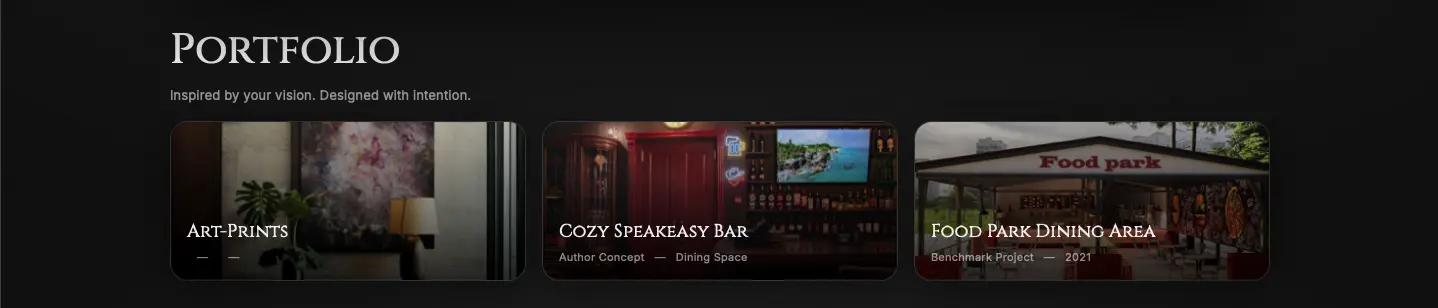
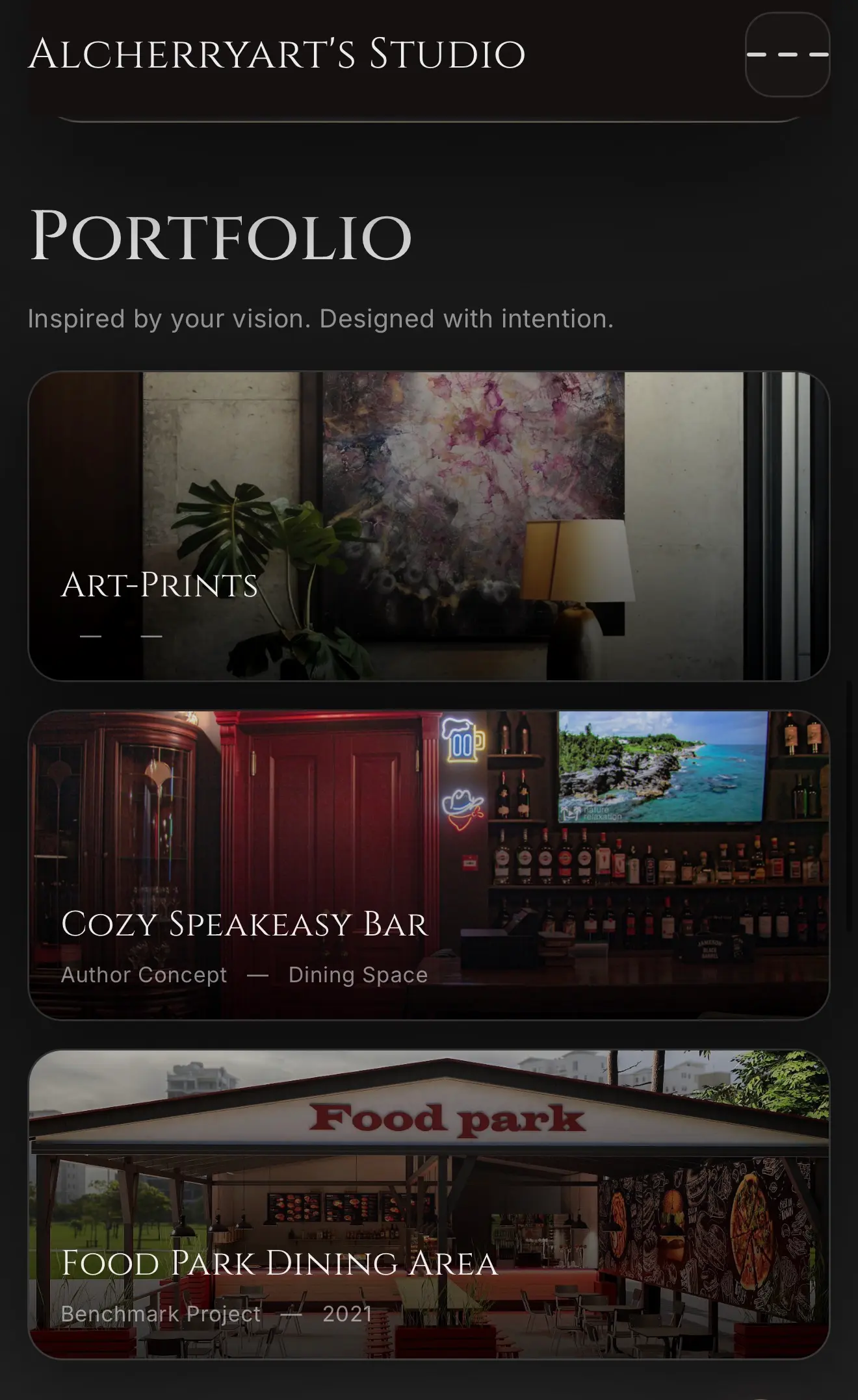
The website includes portfolio entries and project pages, including café / commercial space concepts with objectives, solutions, zoning, materials, lighting, furniture direction, and gallery proof. This gives visitors context for the designer’s thinking instead of showing images without explanation.
What this proves
- The portfolio is not only a gallery; it explains the project problem and solution.
- Commercial and residential examples help visitors understand the studio’s range.
- Project detail pages support trust by showing process and design reasoning.
- Visual proof supports consultation requests without overloading the homepage.
Awards, Certificates, and Artist Recognition Built Into the Trust Layer
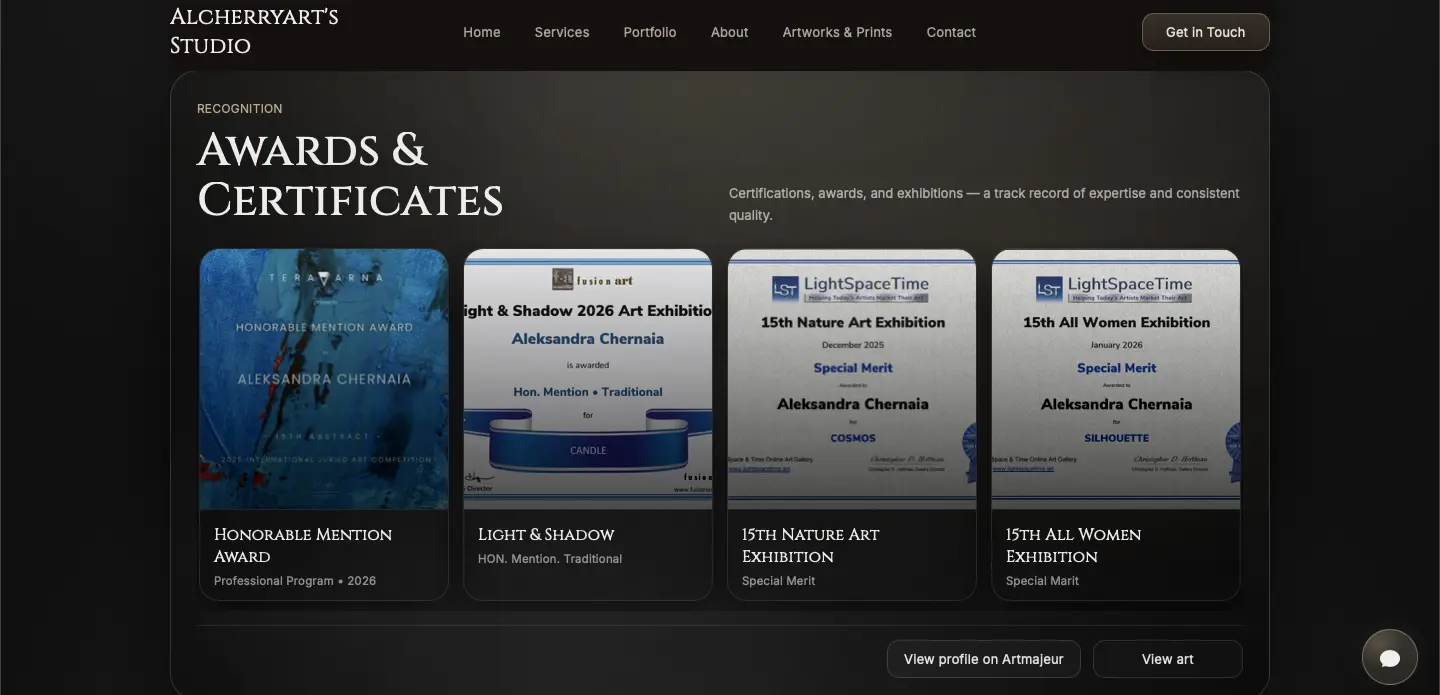
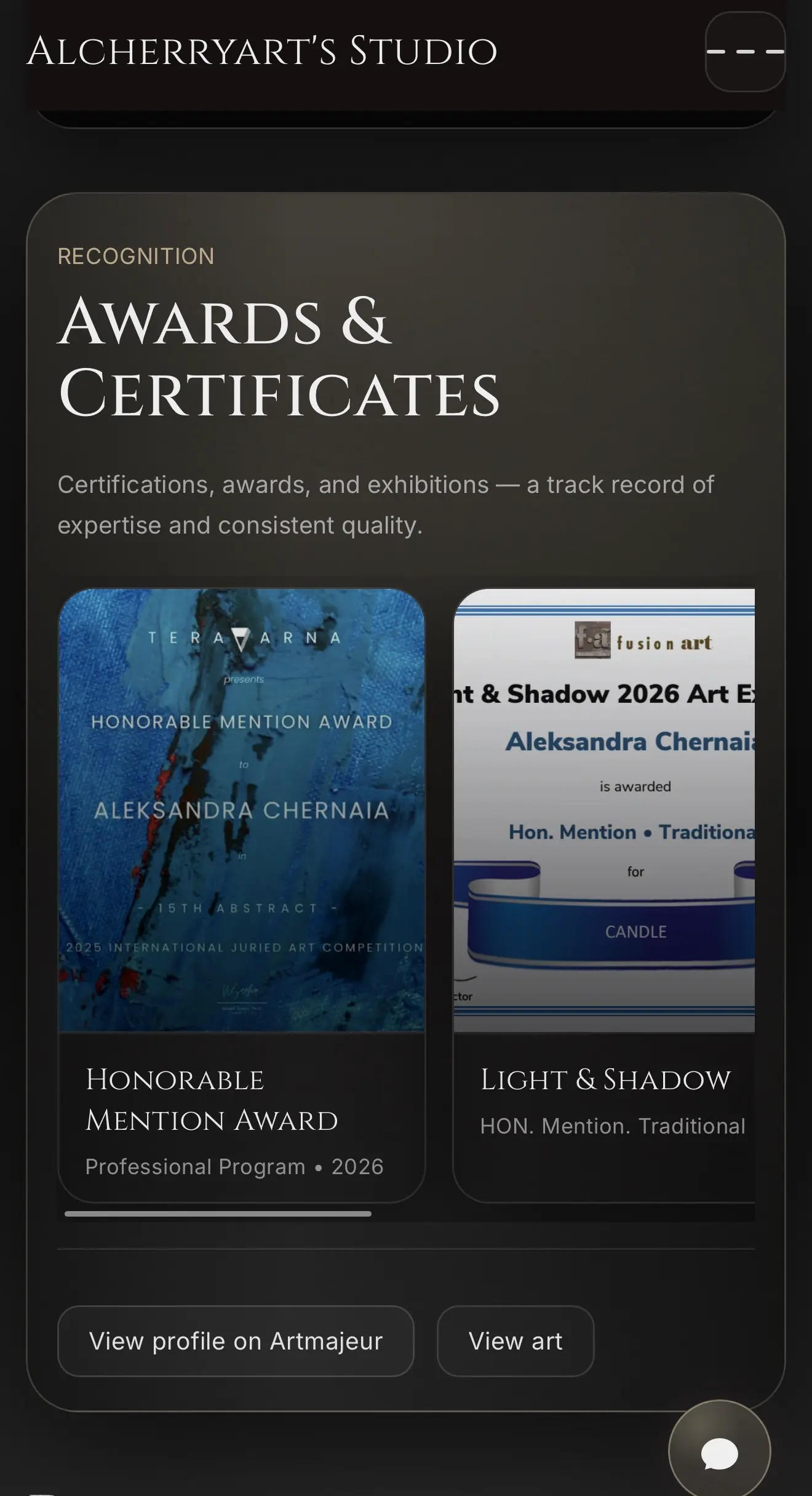
The site includes awards, certificates, exhibition references, and a link to the artist’s external art profile. For a creative service business, these signals help position the studio as more than a decorator — it combines interior design work with artistic recognition and original visual work.
What this proves
- The website uses real credibility sections instead of only subjective claims.
- Awards and exhibitions support premium creative positioning.
- Artist recognition strengthens the art-curation and custom-print offers.
- Trust content gives visitors more confidence before contacting the studio.
Artworks and Prints Presented as Part of the Interior Offer
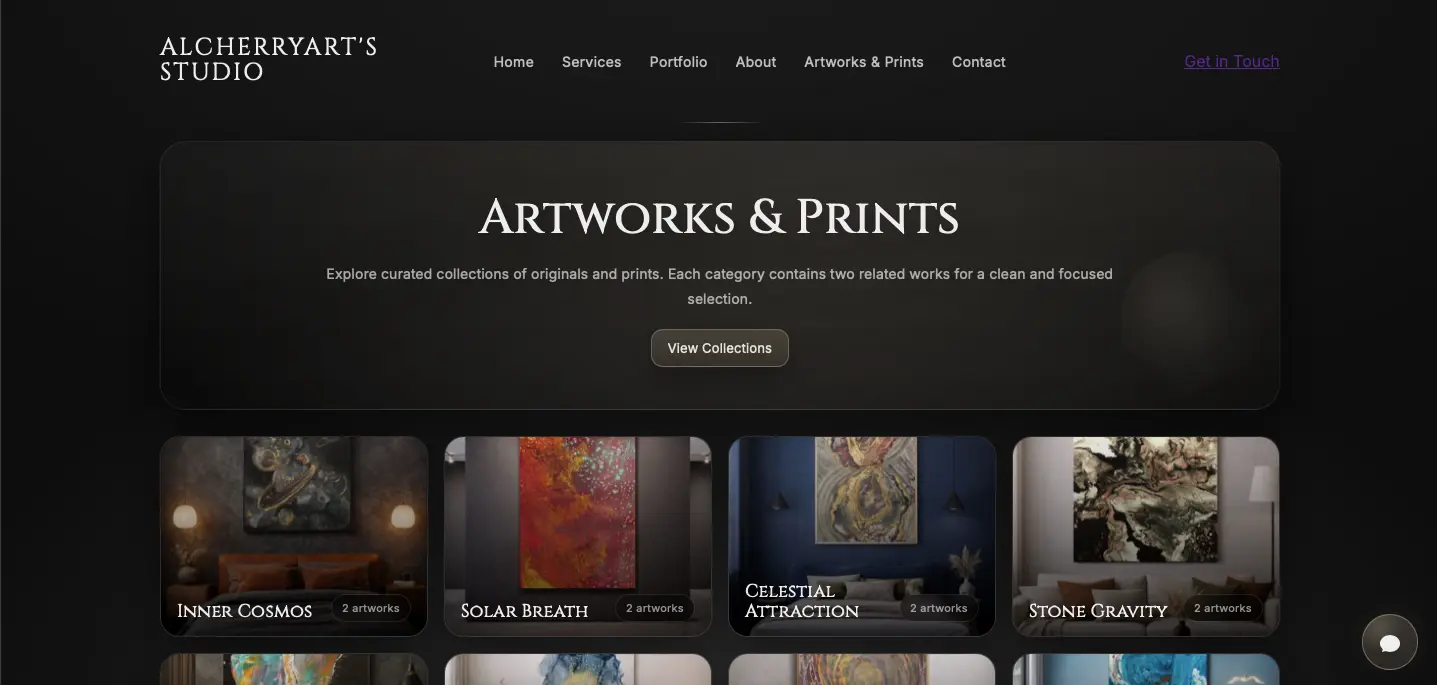
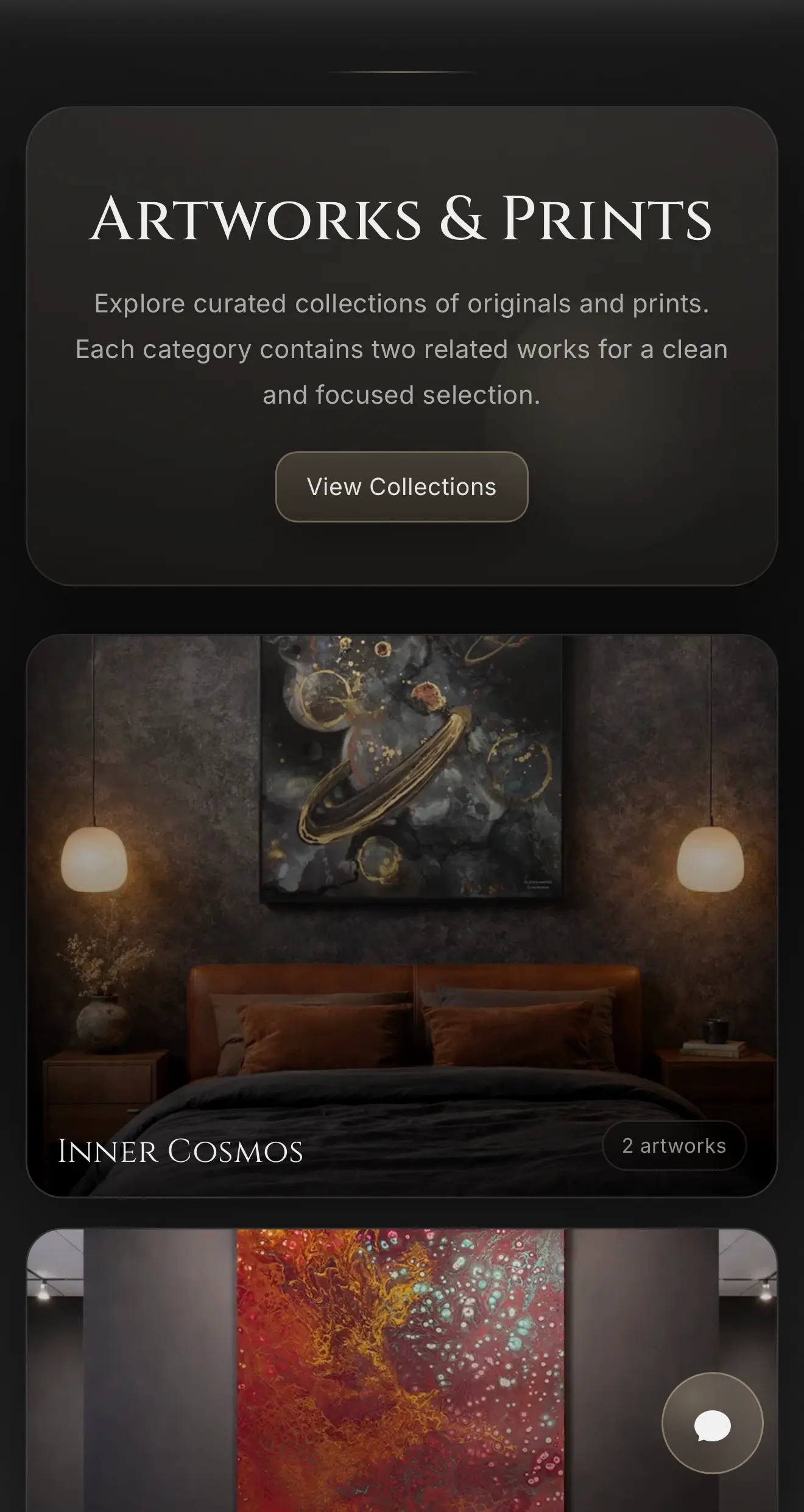
The website gives original abstract art and prints their own place in the structure. This matters because the studio’s value is not only room planning; it also creates or curates pieces that make a space feel finished and personal.
What this proves
- The website supports a hybrid offer: interior design plus original art.
- Artworks are presented as a service and product path, not only decoration.
- The structure gives visitors another reason to contact or explore the studio.
- The art section helps differentiate the business from generic interior design websites.
Contact Page Built Around Project Qualification
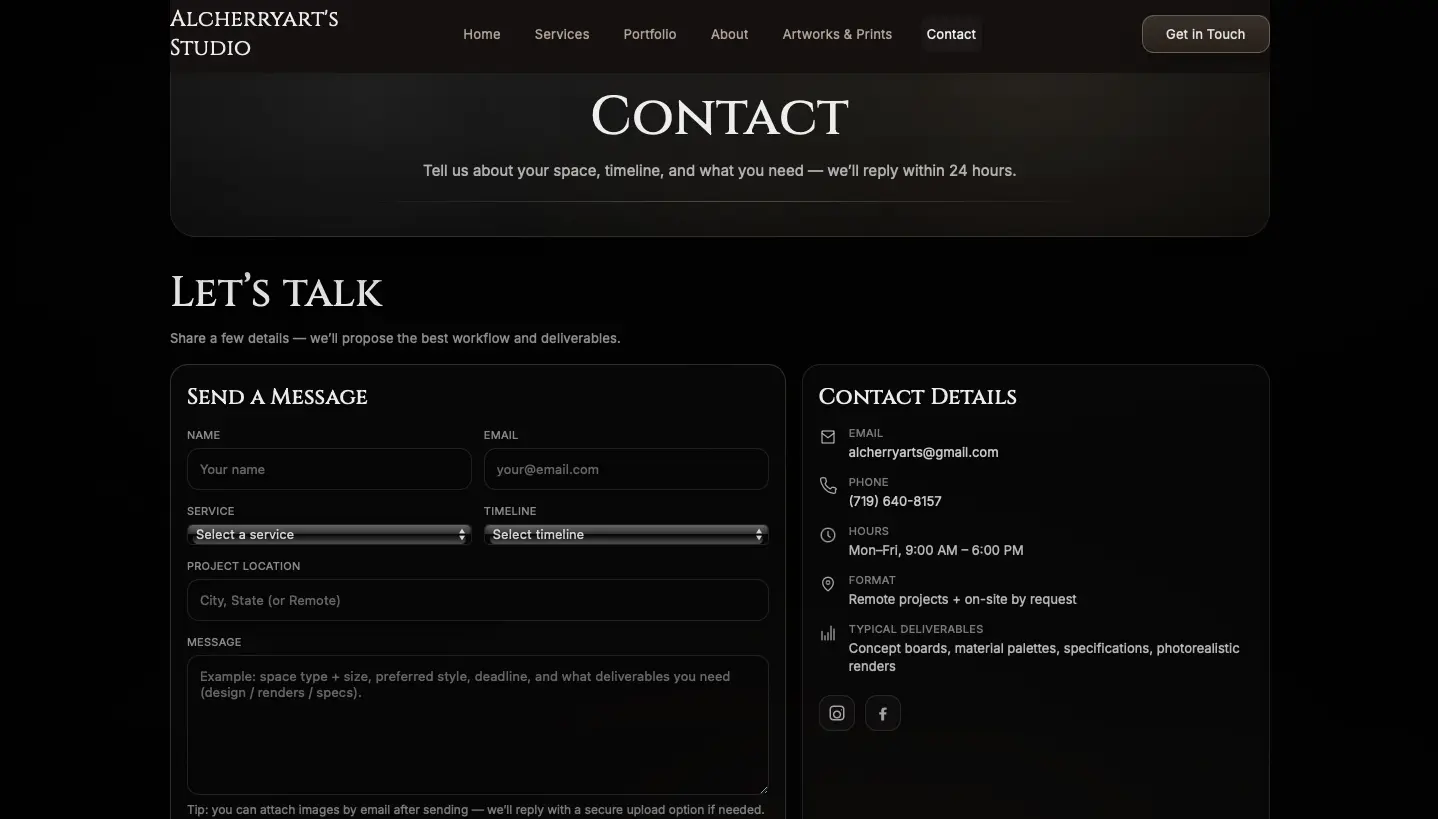
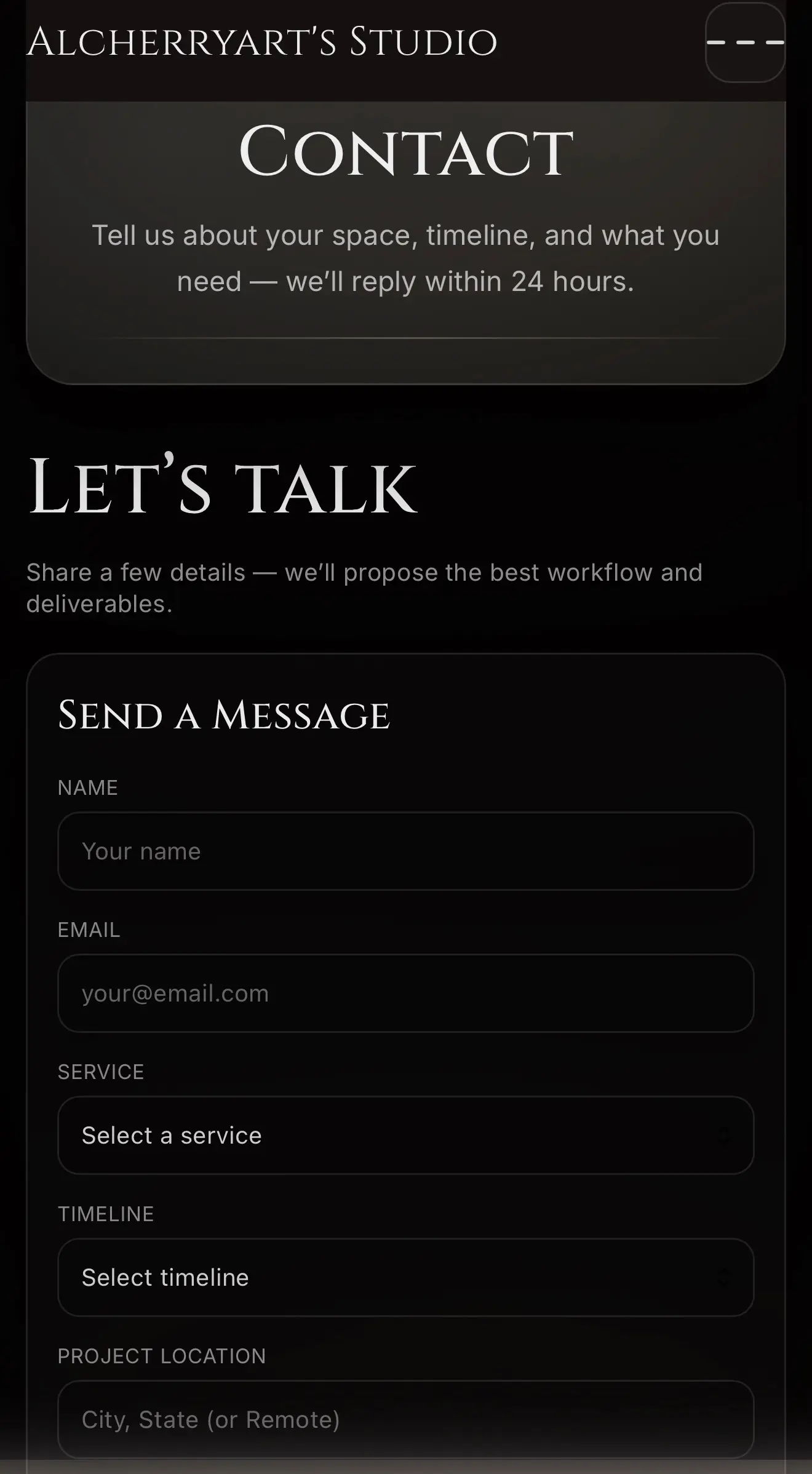
The contact page asks for service type, timeline, project location, and message. It also explains the next steps: reply within 24 hours, quick 10–15 minute call, and a proposal with timeline and deliverables. This turns the contact page into a project intake flow instead of a generic email form.
What this proves
- The form qualifies inquiries before the first conversation.
- Visitors understand what happens after submitting a request.
- The page supports both Denver-area and remote project formats.
- The consultation flow is connected to services and deliverables.
Search-Ready Structure for a Creative Service Website
The website uses crawlable service content, portfolio/project pages, About content, awards and certificates, testimonials, art and print sections, and a structured quote request path. This gives search engines and AI-powered search experiences clearer context than a visual-only portfolio.
What this proves
- The site covers multiple intents: interior design, single-room design, 3D visualizations, art curation, and prints.
- Portfolio and case study pages add useful proof and context.
- Awards, testimonials, and About content support credibility.
- The build is search-ready at the structural level without relying only on images.
Mobile-Friendly Portfolio Structure Without Making Speed the Main Claim
This case is presented as a creative portfolio and consultation-flow build. The technical focus is responsive structure, readable sections, usable navigation, and portfolio accessibility on desktop and mobile. PageSpeed is not used as the main selling proof for this case unless updated test results are available.
What this proves
- The case stays honest: it sells visual presentation and structure first.
- The website supports mobile visitors reviewing portfolio and service content.
- The build gives the creative business a stronger online foundation than a social-only presence.
- The portfolio remains a supporting case rather than a primary performance case.
A Creative Service Website That Presents Taste, Proof, and a Consultation Path
Alcherryart Studio received a portfolio-style website that introduces the designer, explains service options, presents project examples, supports the art and print offer, shows credibility signals, includes testimonials, and gives visitors a clear way to request a consultation.